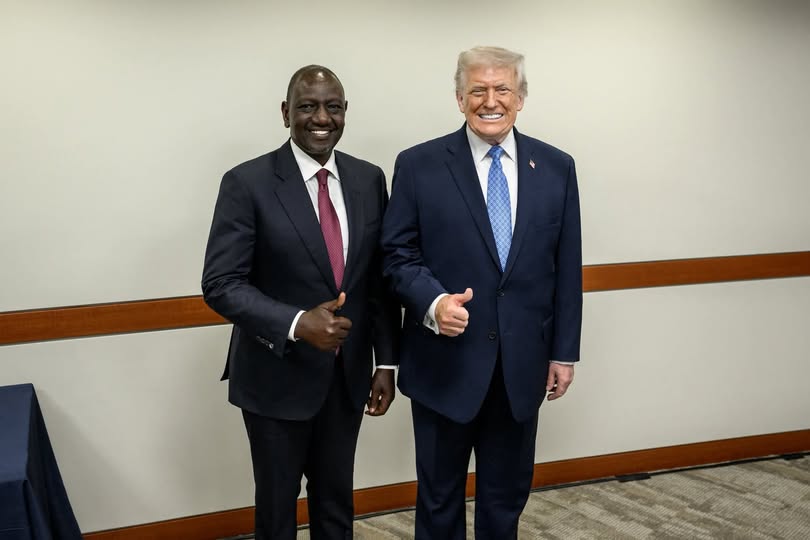
Speaking during his state visit to South Africa and in addresses to the public, President Ruto revealed that he personally approved the project at the request of the U.S. administration.
“When President Trump asked the government of Kenya to support them by having a center at Laikipia Air Base, I gave the okay because it was an agreement and a partnership with friends who have walked with Kenya for 25-30 years,” he stated.
Ruto emphasized that the facility is not unique but part of a broader national network. Kenya already operates 23 other isolation and treatment facilities across the country, making the Nanyuki site one of 24 in total.
The 50-bed unit, funded as part of a larger U.S.-Kenya health infrastructure partnership reportedly worth around Sh 1.8 billion ($13.5 million), is intended to strengthen regional preparedness against Ebola outbreaks, particularly amid concerns from neighboring Democratic Republic of Congo and Uganda.
The President portrayed the move as mutually beneficial and responsible governance. “The facility that is at Laikipia Air Base is not a facility different from all the other facilities that we have across Kenya,” he said, urging Kenyans not to doubt the government’s capacity.
He added that rejecting the U.S. request at its own cost would appear “inhuman,” given America’s decades of health support to Kenya.
It will be most unfortunate and inhuman if we deny the Americans to set up a Ebola Quarantine facility here in Kenya at their cost.
The American people and government have been partners with us in matters of health for over 25 years . The American tax payers resources have been used to support Kenyan health infrastructure.”
Officials have indicated the facility could serve both U.S. personnel and Kenyans if needed. Conversely, Activists and residents have been pushing back.
Opposition figures, and civil society groups, who view the facility as an unacceptable health risk imposed on Kenyan soil primarily for foreign benefit.
Protests in Nanyuki amounting to hundreds of youths and residents marched to the airbase gates, chanting against the project and erecting barricades.
Demonstrators expressed fears that hosting potentially exposed U.S. citizens could introduce or spread Ebola in the community, especially given the base’s proximity to civilian areas.
Critics highlighted that American medical personnel infected abroad are often evacuated to well-equipped facilities in Europe or the U.S., questioning why Kenya which lacks comparable specialized capacity according to some doctors’ unions should shoulder the burden.
The Law Society of Kenya and other groups filed suits, leading to a High Court order temporarily suspending construction and the arrival of foreign patients pending further hearings.
Despite this, reports of U.S. military flights and ongoing activity at the base have intensified accusations of disregard for public concerns and judicial rulings.
Opposition voices and local leaders argue the project prioritizes foreign interests over domestic needs, such as bolstering Kenya’s own healthcare system or securing borders.
Many reject the notion of Kenya as a regional “dumping ground” for high-risk cases and call for greater transparency, public participation, and prioritization of Kenyan lives.
As the legal battles continue and tensions simmer, President Ruto’s defense emphasize a vision of strategic international partnership in global health security.
However, the activists’ rejection highlights deeper questions of sovereignty, risk assessment, and public trust.