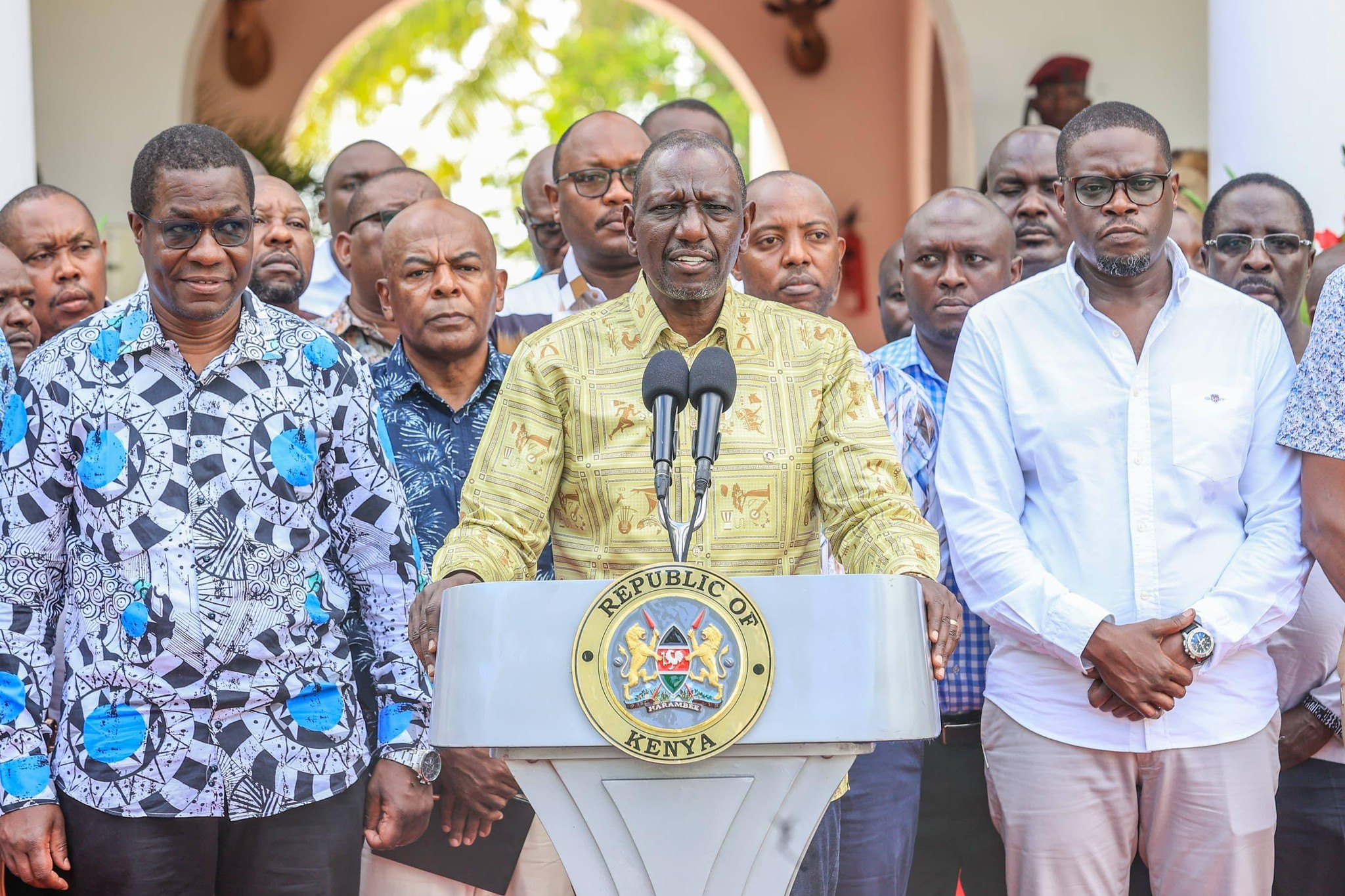
President William Ruto on Friday, May 22, 2026, convened a high-stakes meeting with transport sector stakeholders at State House, Mombasa, resulting in a major breakthrough aimed at easing the pain of soaring fuel prices.
After hours of intense consultations, the government and transport operators reached an agreement that includes an immediate further reduction in diesel prices and the full cancellation of a planned nationwide matatu strike.
The head of state announced that the government has directed the Energy and Petroleum Regulatory Authority (EPRA) to slash the price of diesel by an additional KSh10 per liter in the upcoming June-July 2026 pricing cycle.
This comes after a previous partial reduction following this week’s chaotic protests. Speaking after the closed-door meeting, the President acknowledged the heavy burden high fuel costs have placed on transporters, farmers, manufacturers, and ordinary citizens.
“We have listened to the concerns of the transport sector. In the next pricing cycle, we are going to further reduce the price of diesel by KSh10 for the June-July cycle to help stabilize pump prices and provide additional relief to consumers,” President Ruto said.
The stakeholders, led by officials from the Federation of Public Transport Sector and other matatu and logistics associations, officially called off the strike that was scheduled to resume on Monday, May 26.
They urged all operators, drivers, and conductors to resume normal services immediately.
Beyond the diesel price cut, several other commitments were made during the Mombasa talks included Loan Relief where the government will engage banks to discuss temporary relief measures for transport operators struggling with loans.
Insurance requirements and auctioneers laws affecting the sector shall be reviewed as well as introducing regulations on minimum fares for digital taxi services to protect traditional operators.
Further, during the closed door meeting, the stake holders discussed on transitioning to electric vehicles and exploring regional refining options to reduce dependence on imported fuel.
President Ruto explained that Kenya’s fuel prices are heavily influenced by global factors, particularly instability in the Middle East, which has driven up international crude oil costs.
He defended the government’s interventions, noting that billions of shillings have already been used through the fuel stabilization fund and a reduction of VAT on petroleum products.
The meeting came after a week of turmoil. Transport operators had staged protests and a partial strike earlier in the week over a sharp fuel price hike announced by EPRA, which pushed diesel to record levels above Sh240 per litre in some areas.
“In the April-May and May-June pricing cycles, the Government has spent KSh28.19 billion on fuel price support through direct stabilisation measures and Value Added Tax (VAT) relief of 8 per cent, protecting millions of Kenyans from even greater hardship.
The disruptions caused widespread suffering as commuters and businesses struggled with limited transport.
Stakeholders who attended the meeting expressed cautious optimism, stating that most of their immediate concerns had been addressed.
One leader noted that while the price reduction is not a complete reversal, it provides much-needed breathing space.
As normalcy returns to Kenya’s roads, all eyes will now be on the June-July fuel review to see if the promised KSh10 cut materializes and brings tangible relief to citizens already grappling with a high cost of living.
The government has pledged continued engagement with the transport sector to find sustainable solutions beyond short-term price adjustments.