Climate Action Summit COP29 is already underway at Baku, the capital city of Azerbaijan.
Delegates, environmental activists are addressing the long-term shifts in weather conditions occasioned naturally and others by human activities particularly the burning of fossil fuels like coal, oil and gas which has led to greenhouse gas that has led to increase in temperatures.
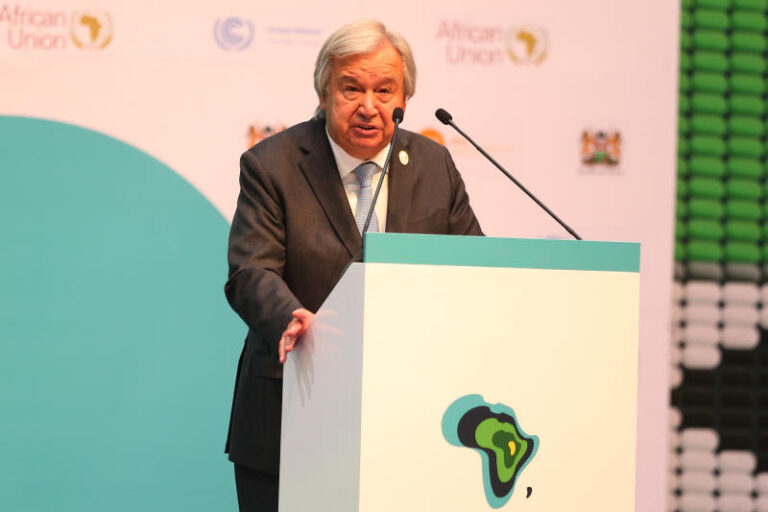
While addressing the summit, the UN Chief secretary Antonnio Guterres boldly urged the first world nations, development and private bank to help the developing nations with adequate finances to mitigate adverse effects of climate change since the clock is really ticking
“The sound you hear is the ticking clock, we are in the final countdown to limit global temperature rise by 1.5 degree Celsius because the hottest day and month was recorded this year.
Developing countries who are eager to act are facing many obstacles, scanty public finance, raging cost of capital, crushing climate disasters and debt servicing that soaks up the funds which results in adaptation denial and the ability to transition.
Families have run for their lives before the hurricane strikes. Biodiversity destroyed, floods tearing through the communities and infrastructures, glaciers and ice melting down due to high heat, children going to bed hungry as drought savage’s crops. All these disasters and more are being supercharged by man-made climate change and no country is spared.
In our global economy, supply chain shocks the costs everywhere including food and energy. And this is a story of avoidable injustice. The rich cause the problem and the poor pays the price
Oxfam found out that the rich billionaire emits more carbon dioxide in just nine and a half hours, than the average person does in their lifetime. As a result, every economy will face great fury. But there is every reason to hope.
During Cop 28, an agreement to use clean energy and do away with the fossil fuels was reached, boost climate adaptations and to align the next round of economy with national protection plans of 1.5 Celsius.
While insisting that it was time to deliver, Guterres stated that humanity is behind every individual and that about 80 percent of people in the world need climate action. “Scientists, activists and young people are demanding change and they must be heard and not silenced. The economic imperative is clearly more compelling with every renewal, every innovation and price drop.
Last year, at cop 28 in Egypt for the first time, the amount invested on renewables overtook the amount spent on fossil fuels and almost everywhere solar and wind are the cheapest source of new electricity compared to fossil fuels. The clean energy revolution is here and no one can stop it. The revolution must be able to limit global temperatures.
He urged the focus to be on three priorities, Emergency emissions reductions, to limit global temperature rise to 1.5, and cut global emissions by 9 percent every year so that by 2030. Unfortunately, they are still growing at the present moment.
Developed countries should support emerging economies and every nation, must have the tools and resources for climate action and the United Nations is ready to support efforts every step on the way.
In his sentiments, he echoed that the support should aim at striving for justice in renewals revolutions and critical energies and minerals. “The protection of our people from the ravages of the climate crisis should be tightened. The most vulnerable are being abandoned to climate extremes. The gap between adaptation needs and finance could reach up to 359 billion us dollars a year by 2030.
These missing dollars should not be obstructions on the balance shift. There are lives taken and development denied. All the financial promises must be kept. Developed nations must raise the clock to double adaptation finance to at least 49 billion Us dollars every year.
The adaptations of investments can transform economies, drive progress across sustainable development goals. We need new climate action plans to set out adaptation finance needs and we also need every person on earth to be protective in line with early warnings for all initiatives and we need climate justice.
Last year, developing and the emerging markets outside China received just 15 percent of every dollar invested in clean energy globally. Therefore, cop 29 must tear down the wall of climate finance. The developing countries must not go back to their home countries empty handed and reaching out deals is a must.
Elements that are critical to success includes a significant increase in consumption of public finance, a clear indication of all public finance that the developing nation needs, setting innovative sources particularly levies on shipping, aviation and fossil fuel extraction Based on the principal that polluters must pay and force a framework for great accessibility, transparency and accountability, giving the developing countries confidence that the money will materialize.
In his parting shot, Guterres hinted that boosting lending capacity for bigger and bolder multilateral development banks requires a measured recapitalization, reforms of the business models, including solitaire private finance firms. The resources available may seem insufficient but it can be multiplied with a meaningful change in the multilateral system. Big sums require big change. A pinch for change must be advocated.
On climate change finance, the world must pay up or humanity will pay the price. Climate financing is not a surety but an investment, climate action is not optional it is an imperative.