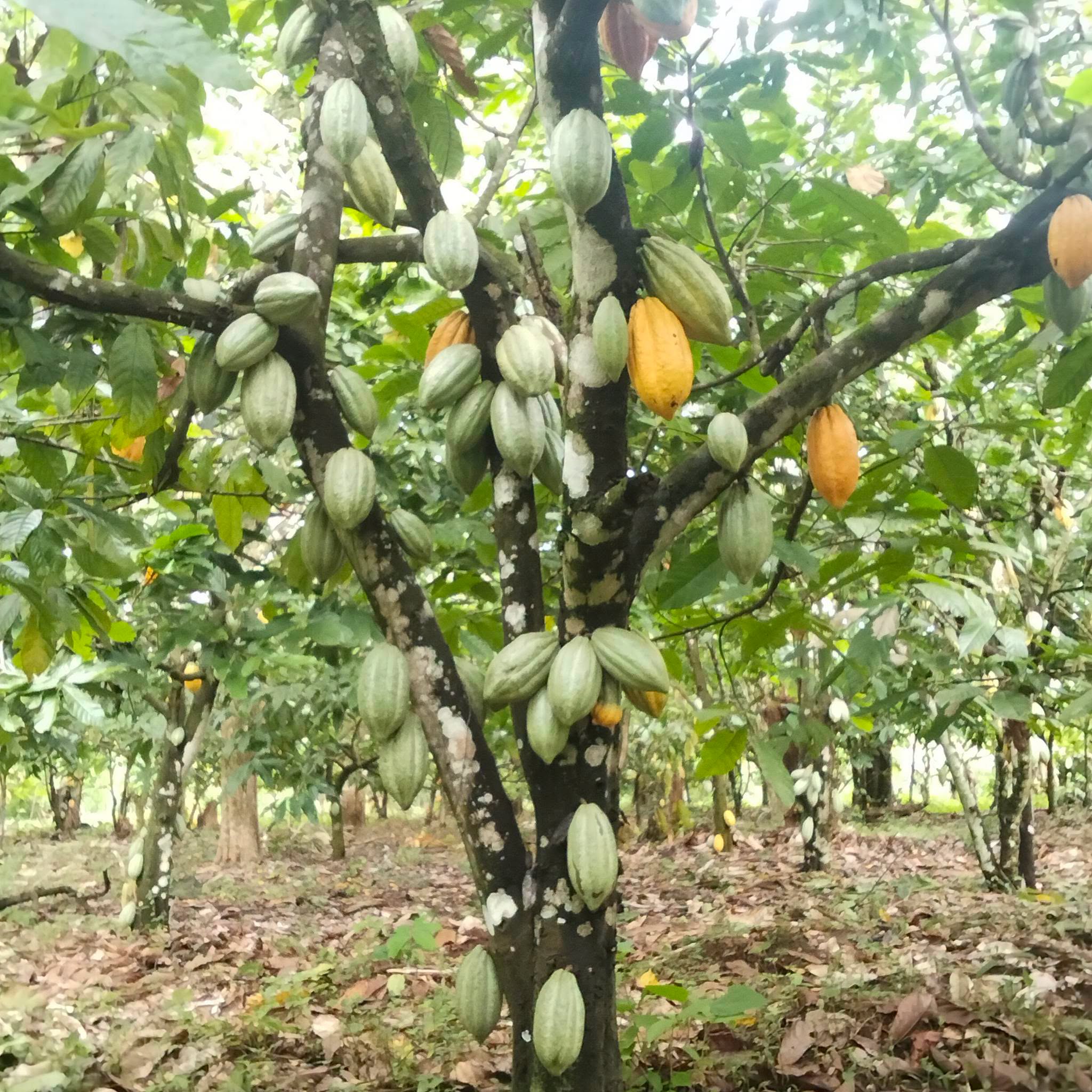
Cocoa plant was listed among cash crops in Kenya by President Ruto during Mazingira Day in Kitale.
During the countrywide tree-planting day, the President also donated cocoa seedlings to farmers, marking the introduction of the crop as a potential new source of income in the country.
The initiative is aimed at promoting tree-growing while creating economic opportunities for farming communities.
While this is new development in Kenyan farming, cacao farming began in 1822 when Portuguese traders brought the plants from Brazil to São Tomé, making it the first African territory to grow it.
Cacao thrives in hot, humid tropical climates within 20 degrees of the equator. Suitable conditions in Kenya can even be found in regions like coastal Kenya or the Lake Victoria basin.
The plant may grow to greater heights so pruning them regularly to maintain a harvest height of 2.5 to 3.5 meters.
The prices of cocoa varies depending on the country but globally, a kilogram ranges between $5-6 which translates to Sh129 currently.
Cocoa trees begin producing pods in 3 to 5 years and remain productive for up to 30 years.
During harvest pods are opened, and the beans undergo fermentation and drying to develop flavor.
Beans are roasted, ground into liquor, and pressed to separate cocoa butter from cocoa solids (cocoa powder).
Constant daytime temperatures between 21°C and 32°C (frost-free) with filtered sunlight for young trees which are still at their tender stages.
With the moisture content, 1,500 to 3,000 mm of well-distributed annual rainfall and humidity between 70% and 100% will optimally make the plant thrive.
The soil should be rich, deep, well-draining loam or clay-loam soils with a pH of between 5.0–7.0. waterlogged souls should be avoided as it will aid in root rotting.
Growing of Cacao plants requires intercropping them with companion plants. The Agroforestry.
Such plants include bananas and plantains to help provide shade and retain soil moisture. Papayas serve as natural windbreaks while legumes fix nitrogen naturally in the soil.
Marigolds and basil are strong repellants of unwanted pests.
Trees like Eucalyptus that fasten depletion of moisture from the soil should be totally avoided.
At the onset of planting cacao, fresh seeds are most preferred due to high viability to the dried ones which losses viability.
The seeds are to be soaked in warm water for 24 hours and plant them 2.5 cm deep in moist nursery soil.
Seeds sprout in 10 to 14 days. After 4 to 6 months, transplant seedlings at the start of the rainy season, spacing them 3 to 4.5 meters apart in organic-rich holes under partial shade.
Following the transfer of the seedlings, watering and applying fertilizer become the norm.
Water them deeply 2 to 3 times weekly during dry spells without waterlogging and apply organic fertilizers rich in potassium and nitrogen, alongside compost or manure, every few months.
Beyond creating chocolate, cocoa is rich in antioxidants, flavonoids, and magnesium, supporting heart health in moderation.
Cocoa butter is also widely used in cosmetics, while sustainable cocoa farming aids biodiversity and carbon sequestration.