In a world that too often turns away from children with disabilities, Pastor Ann Njeri Wachira has spent nearly twenty years walking the hard road with them.
As CEO of Ruai Compassionate Hands Foundation for the Disabled, she has turned a personal calling into a place of refuge where abandoned, orphaned, and heavily stigmatized children find more than shelter. They find dignity, possibility, and the quiet insistence that disability is never a crime.
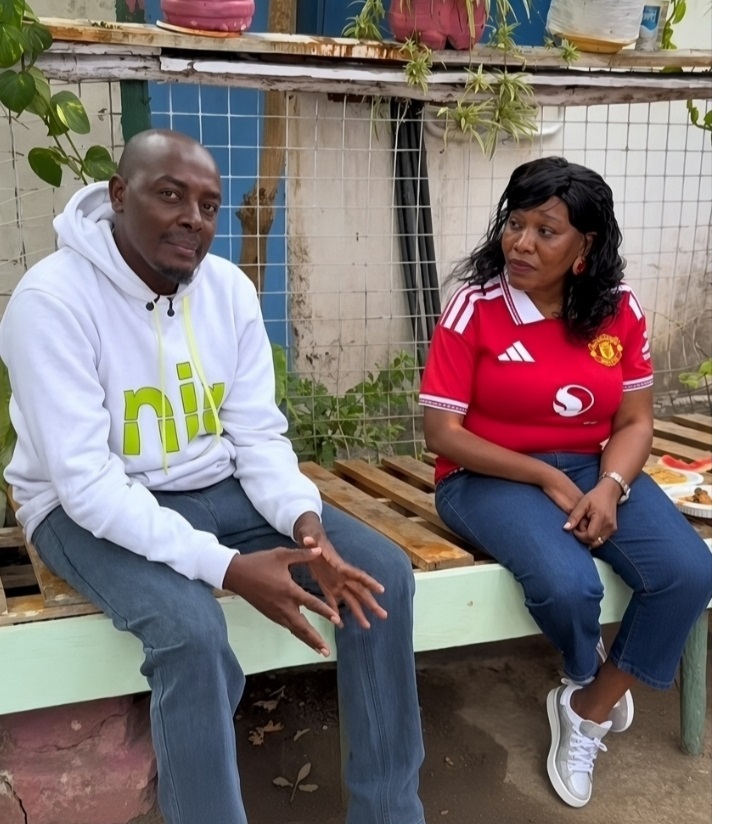
In a candid, and emotional one-on-one conversation with Steve Sila famously Known as Captain, founder of Nia Creation, Pastor Ann described the work as “more of a ministry than a career.”
Captain’s crew together with that of his spouse Norah Muendo of Nila baby shop had paid the home a courtesy call bringing them a lot of goodies including those contributed by online fans and friends.
He was interested to know how Pastor Ann managed to play along with the role of keeping the operations at the rescue home since what she did was already mind blowing and exhaustive at the same time.
In her response, she hinted that “our role is to rescue children who have been abandoned, orphaned, stigmatized, or come from families too broken by poverty or abuse to care for them,” she said. “When they arrive, the future is unknown.
Some come in wheelchairs, others are non-verbal, many carry the silent wounds of rejection. But time and consistent care have rewritten their stories.”
Sila asked how she manages a home that is clearly not for the faint-hearted. The conditions of the children, he noted, can be heartbreaking. Pastor Ann did not sugar-coat it.
She disclosed, that her journey begun in 2008 as a trained journalist. While reporting in Korogocho, she saw children living the very vulnerability she herself had escaped.
Born with a disability, she did not walk until she was nine after six surgeries. Well-wishers helped carry her through school. That lived experience still shapes everything she does.
“Children in the slums were being killed because of disability,” she recalled. “Others were left to starve in their own homes. Some were subjected to sexual abuse. It sparked something in me.”
She started a small daycare. In the first week alone she received eleven abandoned children. Parents sometimes admitted openly that disability was the reason they had walked away. As numbers grew and space ran out, she relocated the work to Ruai.
The results speak quietly but clearly. “Initially, 76 children relied on wheelchairs. Today that number stands at 16. This shows that 60 children no longer depend on the wheel chairs. Improvement is not a hope here, it is a pattern.”
Four young people from the home are now at university studying special education, law, and medical engineering. Another fifteen are in technical courses including tailoring, electrical wiring, and other practical skills.
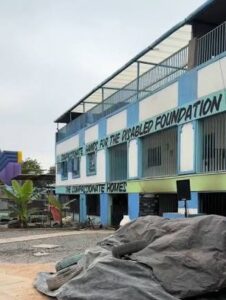
The home, she stresses, is not meant to be a permanent destination. It is a safe harbor between school terms or hospital stays, a place the children can always return to.
“The main thing is to give them dignity and a place to stay,” she said. “Most of them are abandoned because of discrimination and stigma. What they need most is to be loved.”
From that foundation of love comes careful assessment, therapies, medication, and schooling matched to each child’s needs.
Pastor Ann draws a clear line between physical disability and cognitive challenges.
A child with a physical disability may need significant practical support yet still make independent decisions.
Those with intellectual disabilities, including autism, Attention Deficit, Hyperactivity Disorder (ADHD) and cerebral palsy, often need more help navigating choices. Both groups, she insists, deserve the same unwavering investment.
While appreciating the visitation and support, she acknowledges that the work is demanding. “Forty-six children require adult diapers.
Food for the household costs around 260,000 shillings a month. Medication for seizures adds further pressure. The total monthly budget, including salaries, hovers around 1.2 million shillings.”
She admits that there are weeks when food runs critically low, especially when school terms end and more children return home.
“Like this week we have been struggling a lot with food,” she admitted. Yet she places the scarcity inside a larger faith: “We call God in heaven, and He in turn calls the people to help. You are the ones God has called.”
Caregivers arrive in different ways. Some feel an immediate pull toward the children. Others wrestle with the emotional weight and still choose to stay.
The non-verbal children teach staff a language of observation—needs read in posture, expression, and the smallest shifts in behavior. “Someday, those who use wheel chairs shall be out there playing with the rest,” Pastor Ann said.
“It is just a matter of time.” The work is therapeutic for the adults too. “However, there are days I do not feel like showing up,” she acknowledged, “but for them, our presence matters. The story of compassion is usually told from the strongest hearts.”
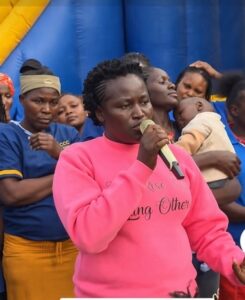
That strength was on full display that day, when, the couple’s daughter celebrated her first birthday at the compassionate home. Cake, songs, and shared joy turned an ordinary afternoon into a lasting memory.
Norah and her team cooked and ate with the children, then urged Kenyans to keep supporting the home, especially with the high demand for adult diapers and specialized medication for those with cerebral palsy.
Seizures remain a constant threat; Norah rallied people to secure critical medication from Mega-Life.
In the quiet of the conversation, Pastor Ann’s message stayed both unflinching and hopeful. Disability does not diminish a child’s worth. Stigma does not get the final word.
Every person who answers the call, whether with resources, presence, or simply the willingness to see becomes part of a larger rescue.
She closed by thanking the couple, their team, friends, and supporters for showing up and walking with them.
“Today is a better day,” she said. “And it keeps getting better every other day.”