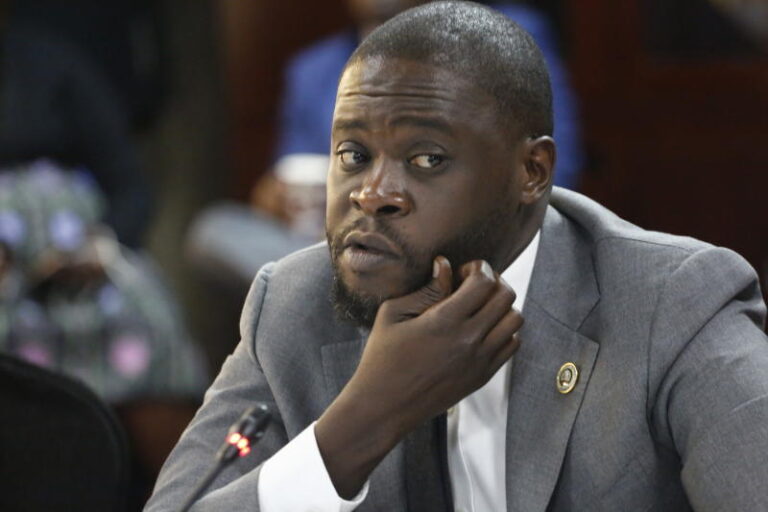
Opinion By Erick Ludeya
Nairobi Governor Johnson Sakaja has launched his much-anticipated podcast, opening a new platform through which he can speak directly to Nairobians and shape the political conversation around his administration.
But away from the microphones and polished studio conversations, a more uncomfortable political question is beginning to emerge: Can Sakaja command Nairobi politically without the shadow of President William Ruto standing beside him?
His critics are increasingly portraying the Governor as a politician who appears most comfortable operating under the protective political umbrella of the President, rather than independently confronting the crowds, rivals and difficult political battles that come with leading Kenya’s capital.
The criticism is particularly sharp whenever Sakaja’s political mobilisation is compared with the large rallies associated with President Ruto.
For a governor presiding over one of Africa’s most politically sophisticated cities, the expectation is not merely that he should deliver services from City Hall, but that he should also possess the political muscle to walk into the grassroots, face residents and sell his record without borrowing another politician’s political capital.
That is where the “Coward of the County” jibe is beginning to gain traction among his detractors.
The question is not whether Sakaja can speak. He clearly can.
The question is whether he can stand alone politically.
His new podcast could therefore become more than a communication platform. It could become a test of whether the Governor can build a political identity distinct from the national administration and convince Nairobi voters that he has the confidence, networks and grassroots following to face the city’s political battlefield on his own terms.
Sakaja’s supporters would undoubtedly dismiss the criticism as political propaganda from opponents uncomfortable with his administration.
And they have a point: appearing alongside the President does not automatically make a politician weak. Governors routinely work with national leaders, and political cooperation can be beneficial to their counties.
But politics is ultimately about perception.
If Nairobians begin to believe that their Governor requires the President’s presence to generate political momentum, that perception could become more damaging than the criticism itself.
The 2027 political contest will not be won in podcast studios.
It will be won in markets, estates, churches, informal settlements, town halls and political rallies — places where politicians must face voters directly, answer uncomfortable questions and withstand hostile crowds.
That is where Sakaja’s political courage will ultimately be measured.
For now, his critics have thrown down the gauntlet:
Can Johnson Sakaja fill a rally without William Ruto?
Until he answers that question on the ground, rather than behind a microphone, the provocative label will continue hanging over City Hall:
Is Johnson Sakaja the “Coward of the County”?