
Today the World Meteorological Organization (WMO) came out with a very clear message; El Niño that’s already happening is not going to stay medium-strength. It’s going to get much stronger in the next few months they call it a “very strong” event and there’s almost a 100 percent chance it will still be with us until at least February next year.
According to the WMO the temperature to the the Pacific Ocean is unusually warm, currently at +2.6°c from 1.5°c both on the surface and deeper down, and that heat is going to push rainfall and temperatures around the world into extremes. As a result there will be more floods in some places, more drought in others, and extra heat.
In the press release by WMO today, El Niño is expected to strengthen further during the coming months before peaking towards the end of this year, with climate impacts continuing well into 2027 courtesy of exceptionally warm ocean conditions across the tropical Pacific
“El Niño is being supersized before our eyes. The science leaves no room for doubt: the planet is in uncharted waters, and those waters are heating up. Sea surface temperatures are rising, temperatures keep climbing, and the world is in the danger zone of extreme weather.
The race now is between rising risks and our commitment to take climate action and protect people. We must win that race,” said UN Secretary-General António Guterres
WMO Secretary-General Celeste Saulo informs that El Niño has the potential to deliver a massive blow to communities and economies across the world.
“We are already seeing disruption and devastation from droughts and floods and we expect these impacts to increase as El Niño intensifies.
This exceptional El Niño demands exceptional preparation and response. Never before in the 50-year history of the World Meteorological Organization have we launched such a major mobilization with National Meteorological and Hydrological Services who are on the frontline of delivering the forecasts and services to save lives and livelihoods,” she said.
“WMO is committed to working closely with partners across the United Nations and humanitarian system to provide the climate intelligence and insights needed to support disaster management and climate-sensitive sectors like agriculture, health, energy and water resources,” she said. “We have no time to lose.
For Kenya that points straight at our short rains in October, November and December. The Kenya Meteorological Department is already saying we should expect heavier-than-normal rain across most of the country.
We’ve seen this movie before, rivers bursting, people forced out of their homes, roads washed away, and diseases like cholera showing up in the dirty water, people losing their livelihood, schools and hospitals affected, and yes people will need relief from lack of food, accommodation and not least, the social amenities.
In the National Contingency plan, he government has not waited for the rain to start.
The Ministry of Interior and National Administration and together with the National Government Administration Officers and County agencies, humanitarian partners and security agencies have activated a full plan in which a special committee under the Deputy President is coordinating everything. On the ground they are doing the practical things:
The Contingency have mapped the places most likely to flood river banks such as the low-lying areas, coastal areas, landslide- prone highlands, parts of Nairobi and other major towns that always get waterlogged due to flash floods as well as arid and semi-arid areas (ASALS)
Agencies such as Kenya Urban Roads Authority are clearing the drainage, culverts, systems of rubbish so water can actually flow instead of backing up. Temporary shelters have been identified for people who may need to move. Roads and bridges that look weak are being checked.
Chiefs and Nyumba Kumi leaders are being used to push and sensitize on the merits of early warnings straight to communities and preparedness. Food, medicine and basic supplies are already being moved to strategic places so help can arrive fast. Rescue teams are on standby.
People living in risky areas are now being cautioned, and advised to move early when told to, keep the drains around the house clear, store clean drinking water, put important documents in plastic bags high up, and never try to walk or drive through flood water.
Late 2023 and 2024, 245 people were killed by floods with over 46,000 households being displaced bring in total of Counties affected to be 42.
All this has been greatly impacted by climate change. The effect of global warming, that has seen the average temperature of the earth rise steadily, worsened overtime with the burning of fossil fuels such as , coal, oil, and gas which emits large amount of carbon dioxide.
The Earth’s ability to absorb carbon has drastically declined due to deforestation and poor agricultural practices. People should now be sensitized to plant more trees, switch from fossil fuels to solar and wind power and better waste management.
These rising temperatures are causing glaciers and ice to melt just like in the recent Himalayan in Nepal ice rock breaking off the glacier on August, 2026 and crashed into the valley temporarily blocking river Trishuli.
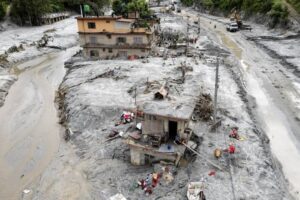
Unfortunately, the icy barrier apparently broke thus unleashing wall of water , mud and rock, a disaster which left over 900 people down the mountain and along the river dead. A lot of people are still missing.
The global WMO warning is serious and the rains are expected to be heavy, but Kenya has started preparing early this time. The systems are being switched on now.
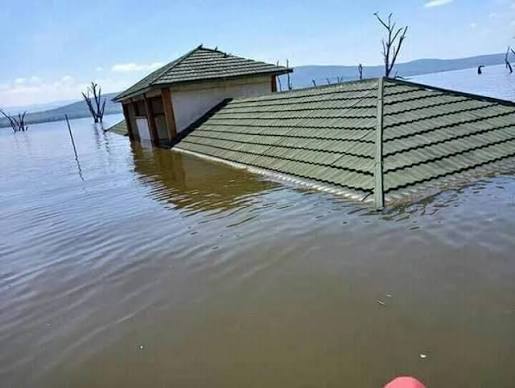
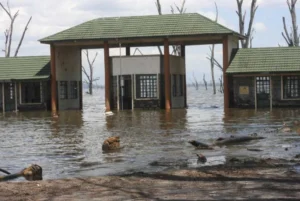
Already lake Nakuru is swelling up gradually and doubling in size due to heavy rains, caused by climate change. More people especially those near Mwariki and Barut have been severly affected hence a forced displacement.
Some of the lakes in Kenya that have suffered the same fate are Lake Baringo, Naivasha, Elementaita Turkana. The surrounding infrastructures and farmlands have been consumed by water.
Rhino and baboon habitats have been submerged as a result of Massive influx of runoff water gushing into the the closed basin lake triggered by high rains and hasted by deforestation , soil erosion and human land use.


