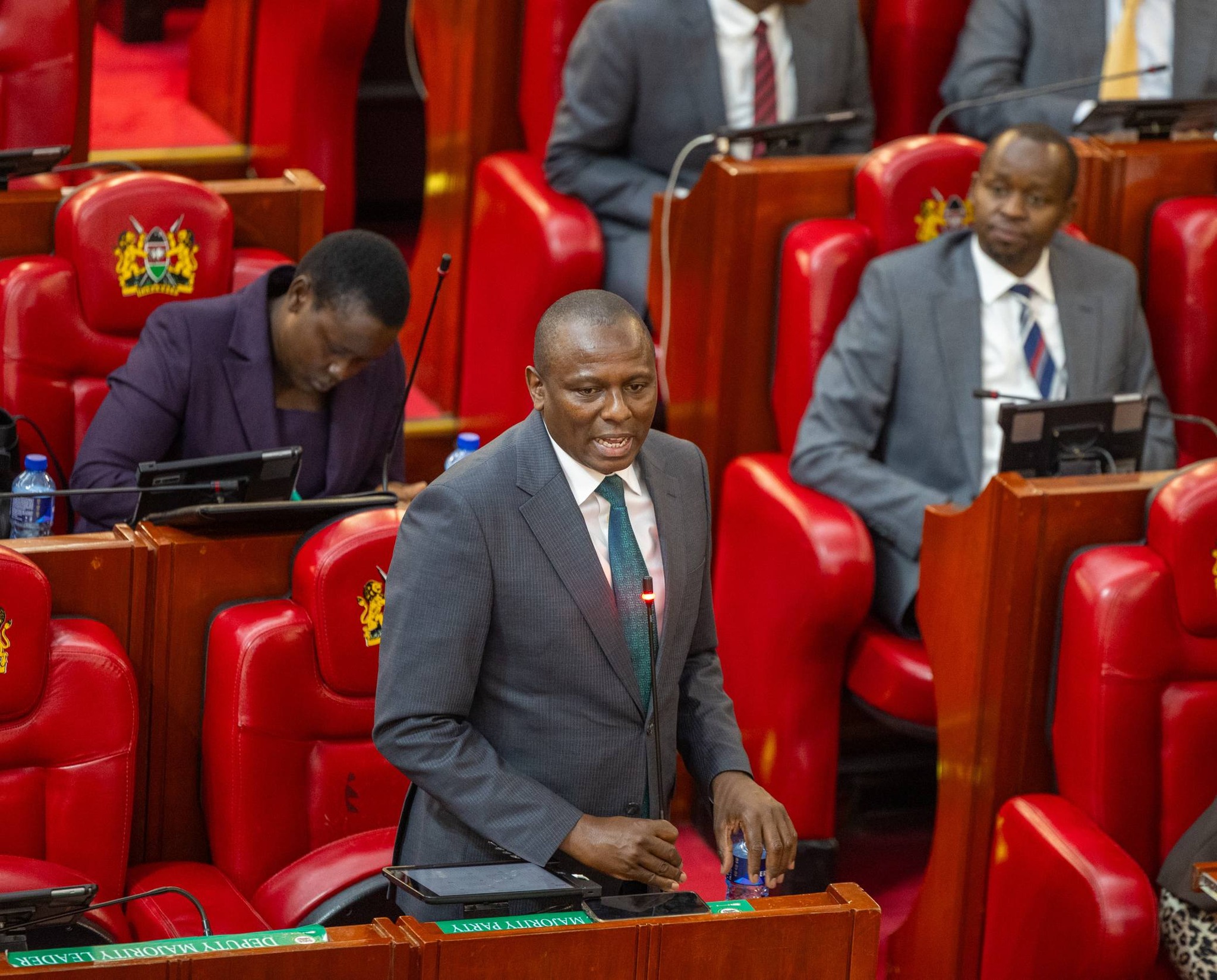
In a riveting address to the Kenyan National Assembly Majority Leader Kimani Ichung’wah shed light on a clandestine network recruiting Kenyans to fight in Russia’s war against Ukraine.
Through a compelling address to the National Assembly, Majority Leader Kimani Ichung’wah unveiled a joint intelligence report detailing the recruitment and trafficking of more than 1,000 Kenyans to serve in Russia’s military campaign against Ukraine.
The report, compiled by the National Intelligence Service (NIS) and the Directorate of Criminal Investigations (DCI), highlights how unlicensed recruitment agencies exploit vulnerable individuals with false promises of high-paying jobs abroad.
The ongoing Russia–Ukraine war continues to trigger the recruitment of foreign fighters by Russia military through rogue recruitment agencies and individuals in Kenya.
The rogue agencies are targeting ex-military, ex-police officers, as well as civilians aged between the mid-20s and 50 years who are desperate for job opportunities abroad with a monthly salaries of around Sh 350,000, and bonuses ranging from KSh 900,000 to KSh 1.2 million, and the prospect of Russian citizenship.” Ichung’wa said, based on report National Intelligence Service tabled in the Natioal Assembly
Once overseas, recruits are reportedly coerced into signing military contracts, frequently under duress after being informed that their tourist visas have expired, stranding them without options.
‘Travel typically occurs on tourist visas through routes like Istanbul in Turkey or Abu Dhabi in the UAE, with some detours via Uganda, the Democratic Republic of Congo, or South Africa to avoid detection.’ Kimani said.
Ichung’wah’s revelations point to alleged collusion by corrupt officials within Kenyan institutions, including the Directorate of Immigration Services, DCI, National Employment Authority, and airport staff at Jomo Kenyatta International Airport, who facilitate unchecked departures.
He also accused personnel at the Russian Embassy in Nairobi and the Kenyan Embassy in Moscow of aiding the operation through visa issuance and movement support.
As of February 2026, at least 39 Kenyans are hospitalized, 28 are missing in action, 89 remain on the front lines, 35 are stationed in military camps, 30 have been repatriated, one is detained, and one has completed their contract.
“The ongoing Russia-Ukraine war continues to trigger the recruitment of foreign fighters by the Russian military through rogue recruitment agencies and individuals in Kenya,” Ichung’wah stated during his speech.
He called on citizens to verify overseas employment opportunities via licensed agencies and the National Employment Authority’s portal, while advocating for swift investigations to dismantle the syndicate.
This disclosure has exposed deep-seated flaws in Kenya’s immigration and employment systems, heightening risks of human trafficking amid global conflicts.