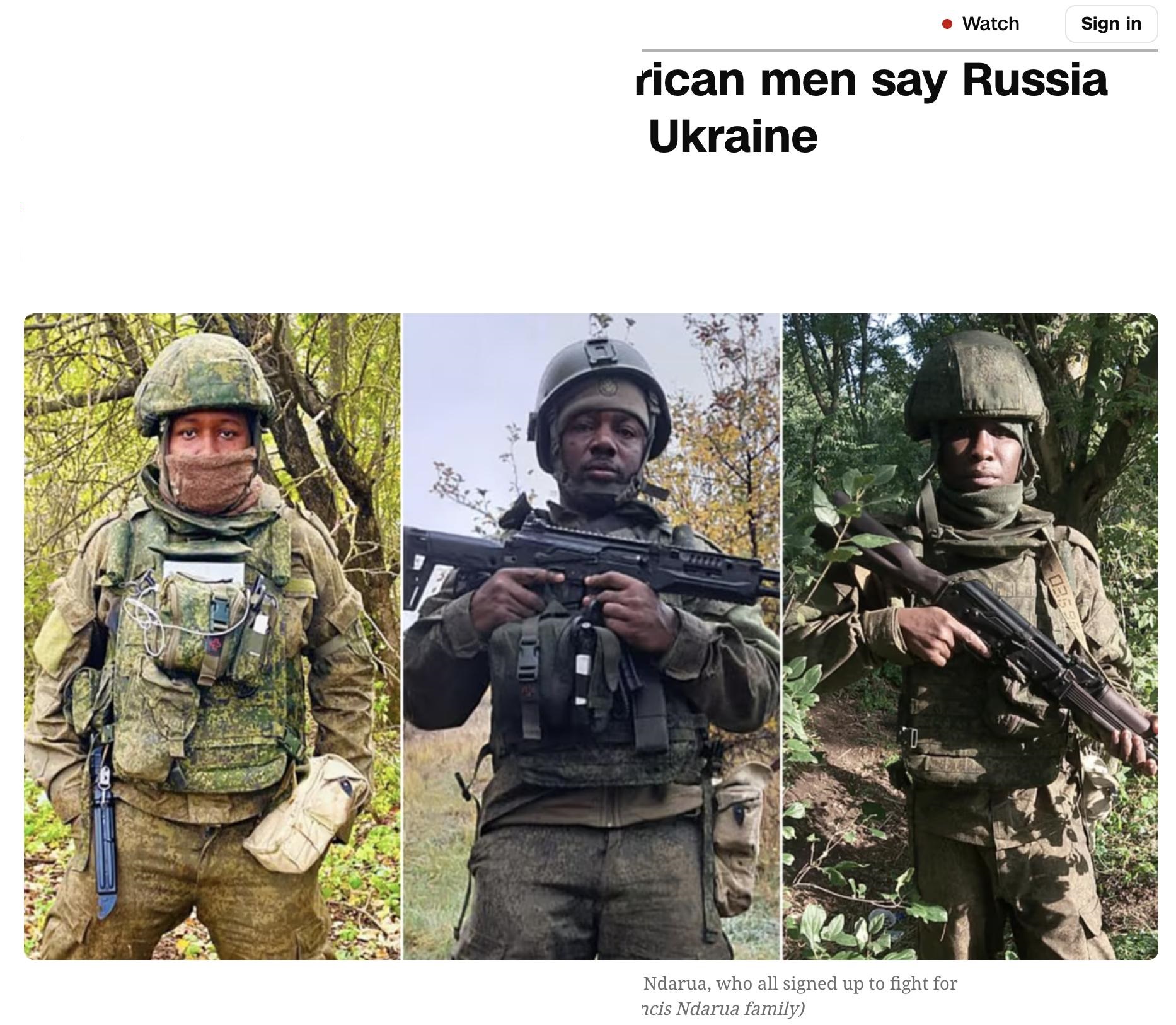
Patrick Kwoba, a 39-year-old carpenter from Kenya, endured a traumatic experience after being deceived into serving as a combatant in the Russian military during the ongoing Russia-Ukraine war.
Kwoba was initially enticed by a friend’s social media posts depicting an idealized version of military life.
He paid approximately Ksh 80,000 (about $600 USD) to a Kenyan recruitment agent, who promised him a lucrative signing bonus of Ksh 3.7 million (roughly $28,000 USD) upon arrival in Moscow.
Expecting a role as a security guard, Kwoba instead received only three weeks of rudimentary training before being deployed to the front lines as an infantry soldier.
During his deployment in Ukraine, Kwoba sustained injuries in an ambush involving a Ukrainian drone and subsequent grenade attack.
When he signaled for medical assistance using the Russian military code “3-star,” his Russian comrade reportedly responded with hostility, chasing him away and firing shots at him but he managed to ran away.
Kwoba described his four-month tenure in the Russian army as “hellish,” highlighting pervasive racism against African recruits, withheld salaries, and their frequent assignment as expendable “bait” in high-risk positions.
While recovering from his wounds in St. Petersburg, Kwoba seized an opportunity to escape. His passport and phone had been confiscated upon arrival in Russia, complicating his efforts to travel back.
He eventually reached the Kenyan Embassy in Moscow, where officials provided emergency travel documents to facilitate his return.
Now back in Nairobi, Kwoba requires further surgery to remove embedded metal shrapnel from his back and thighs.
He cautioned potential recruits: “So long as you’ve stepped into the Russian military, you escape, or you die.”