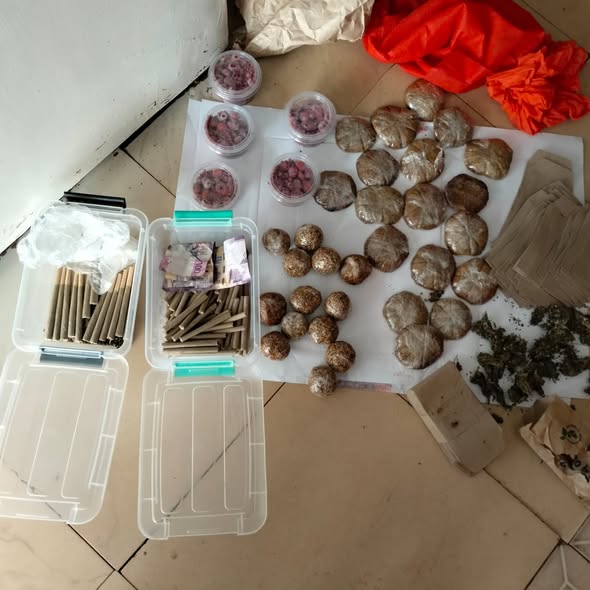
Kenyan Mother said to be a resident of Tranzoia publicly pleaded with the Government to help her purchase two sacks of maize so as to quite selling alcohol and trafficking bhang.
In a bold and unexpected moment during a public meeting in Trans Nzoia County, Western Kenya, a well dressed mother captured national attention by openly confessing to selling illicit alcohol and bhang (marijuana) as her means of livelihood.
The event, attended by security and government officials, blended humor and gravity as the woman addressed the crowd and authorities confidently and directly.
Speaking at the podium amid laughter from the audience, she playfully acknowledged her customers in the gathering, exclaiming, “I see you all out there!” before delivering her heartfelt plea.
“I want the national government to help me get out of brewing alcohol and selling it to people, even children. I need the government to help me at least with two sacks of maize so that i can support myself.
I also want to stop selling bhang,’ she said while acknowledging her customers in front of the cheering crowd.”
“I’ll quit today if you give me two bags of maize to start a legitimate business,” she declared, emphasizing her desire to transition to a legal venture to support her family.
Her candid admission and straightforward request left the audience both amused and astonished, shedding light on the economic hardships that compel some individuals into illegal activities.
This incident unfolds amid a nationwide government crackdown on illicit liquor and substance abuse, spearheaded by Deputy President Kithure Kindiki.
The administration has suspended licenses for low-cost alcohol producers, mandated the closure of bars near schools and residential areas, and launched factory inspections to enforce quality control and traceability.
Complementing the crackdown, rehabilitation programs for those addicted to alcohol and drugs are being implemented at the village level, with local chiefs instructed to gather data on chronic addicts to facilitate their treatment.
The video of the woman’s speech rapidly went viral on social media platforms such as Facebook and Instagram, igniting discussions on poverty, government assistance, and the efficacy of anti-drug initiatives.
Many online users commended her honesty, with comments like, “One thing I admire about this woman is her honesty.” on the contrary many castigated her for ‘reporting’ herself with some wondering if she was under the influence of what she was selling.
Others debated whether two sacks of maize would suffice for sustainable change, amid wider conversations on combating substances like muguka and alcohol in regions such as Mount Kenya and the Coast.
Although no immediate government response to her specific request has been reported, the event humanizes Kenya’s battle against illicit brews.
As the nation enforces stricter regulations, such narratives underscore the necessity for economic alternatives and robust support systems to aid vulnerable communities in shifting away from unlawful trades.