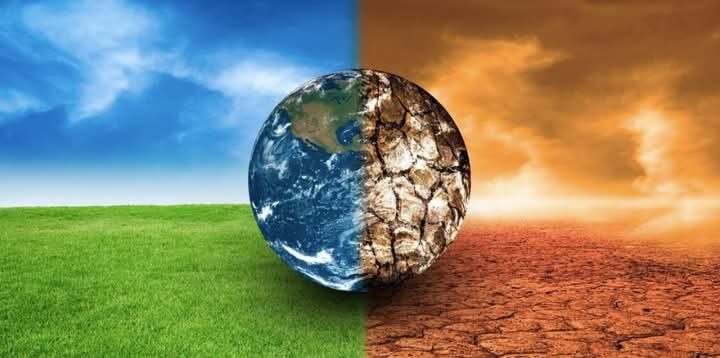
Climate change has significantly caused adverse effects on society, economy and environment not just in Kenya but around the world.
As a result, the Kenyan government is on the forefront in incorporating measures that help in mitigating and adapting to the new and extreme weather patterns that have led to loss of biodiversity.
In addition, water and food scarcity, health risks and poor sanitation, human-wildlife conflict, migration and destruction of infrastructure are among the effects caused by climate change.
Global warming has been the major cause of climate change majorly contributed by human activities which include fossil fuels and use of hydrochlorofluorocarbons gases that is believed to have contributed to the depletion of Ozone layer thus increase in temperatures.
In the recent report by the National Environment Management Authority (NEMA), it confirmed that in a year’s time Kenya will cease the importation of hydrochlorofluorocarbons (HCFC) gases, a move which is in compliance with the Montreal Protocol.
The Montreal protocol is a worldwide agreement that seeks to promote a new generation of chemicals that are safe for the climate as well as to halt the destruction of Earth’s protective ozone layer.
Kenya under the Montreal protocol is obliged to only import the HCFC gases not exceeding 171.6 tonnes next year.
In a statement released on wednesday of December 18 NEMA confirmed that importation after 2025 will be prohibited and importers are urged to apply for their annual import licenses for the year 2025 from NEMA through the Kenya Electronic Single Window System. The deadline for application shall be on February 8, 2025.
“The year 2025 will be the last year allowed for Kenya to import HCFC under the Montreal Protocol. Importers are hereby reminded that the phase-out date for importation of HCFC for Kenya is 1st January 2026,” NEMA said.
Further in the statement, “Importation of these substances without a valid license shall be an offence under the Environmental Management and Coordination (Controlled Substances) Regulations, 2007”
HCFCs have been widely used ever since but according to the scientist, the HCFC’S could contribute to 0.5% of global warming at the end of century if left unchecked and can be detrimental to the environment.
Globally, the effects of climate change coupled with the rising temperatures, sea ‘levels, delapitating economy, unconducive environment and poor social ties has really affected the lives of both human, animal and living organisms that are interdependent.
The chemical gases found in these gases have been linked to depleting the ozone layer, which helps in protecting the harmful ultraviolet radiation from the sun.
Most of the countries internationally are now seeking to embrace alternatives to HCFCs such as technologically inventing new refrigerators that do not rely on harmful gases and those that possibly utilise air as a refrigerant, capable of achieving temperatures as low as -60 degrees Celsius.