When severe droughts strike, Kenya’s milk supply takes a predictable hit. Between June and July 2026, formal deliveries to dairy processors plummeted from over 84 million liters to under 81 million a change that immediately trickled down to consumers.
Urban residents suddenly found themselves paying up to between Sh 85 to 100 for a single liter of milk, with standard 500ml packets climbing to KSh 80 depending on the place.
Faced with an increasingly vulnerable cattle sector, the government is looking for new solutions and raising a few eyebrows in the process.
Speaking at the Agriculture and Food Security Transformation Summit in Nairobi, President William Ruto instructed Livestock Development Principal Secretary Jonathan Mueke to begin negotiations to import high-yielding camel breeds and domesticated dairy buffaloes.
The goal is to diversify the country’s milk supply so future droughts don’t leave supermarket shelves empty.
“I had directed the Agriculture PS to help us bring in a better breed of camel and bring another buffalo breed. Buffaloes also produce a lot of milk.
In India there are buffaloes… Bring in buffalo and also bring in a better breed of camel because we need to diversify our milk sources,”
President Ruto explained, also noting that camel milk already fetches premium prices around KSh 180 to 200 per liter—due to its resilience and high demand in urban areas.
The proposal quickly raised concerns among those picturing farmers trying to herd Kenya’s notoriously ferocious Cape buffaloes.
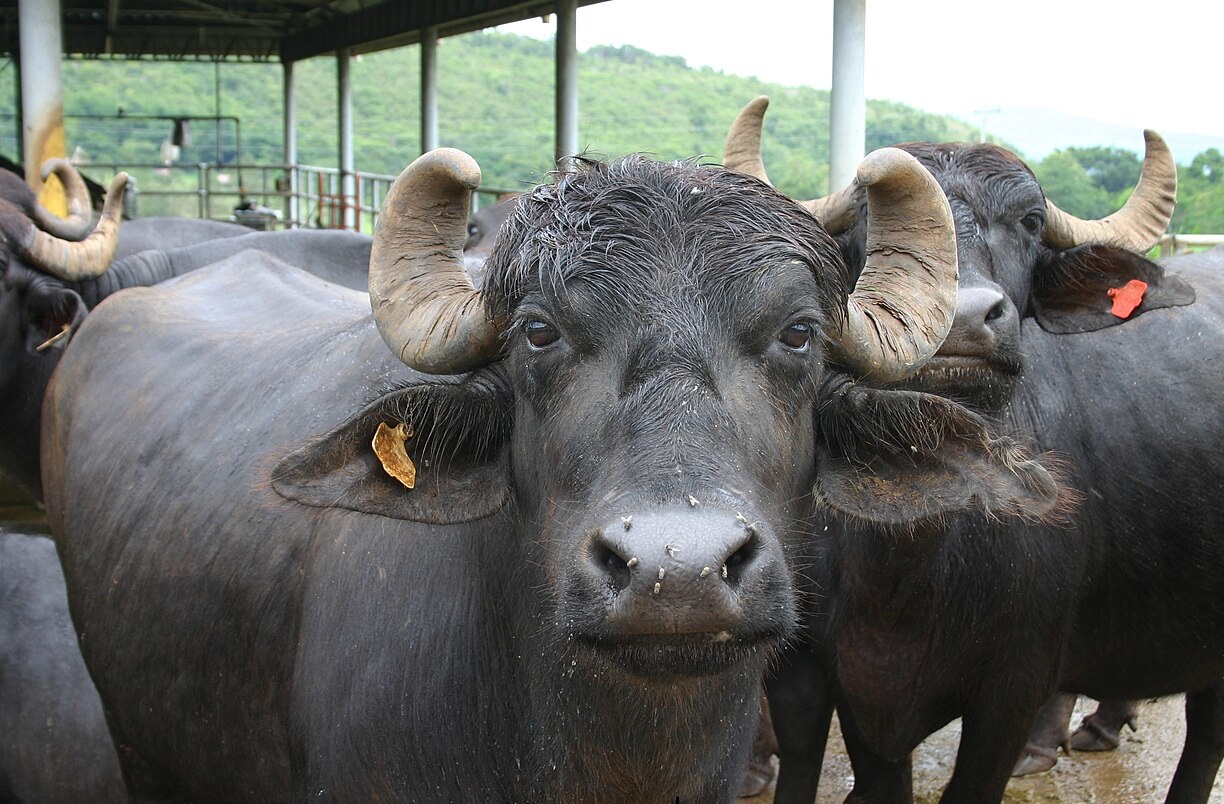
However, livestock officials were quick to clarify that the target is the domesticated Murrah water buffalo (Bubalus bubalis), an Indian breed with a long history of dairy farming, not the dangerous wildlife found in national parks.
Originating from India’s Haryana and Punjab states, the jet-black, tightly horned Murrah is considered the world standard for buffalo dairy.
PS Mueke says that a well-managed Murrah buffalo routinely produces 6 to 12 liters of milk a day, yielding between 1,500 and 2,500 kg per lactation cycle.
It’s milk is highly rich in butterfat ranging from 7% to 8% fat nearly double that of average cow’s milk it is prized for making rich cheeses, ghee, and yogurt.
Unlike Kenya’s native Syncerus caffer, Murrah buffaloes are calm, farm-adapted animals built for commercial milking.
Despite the agricultural logic, the plan immediately ran into political headwinds. Opposition figures and critics seized on the idea, casting it as absurd.
Former Deputy President Rigathi Gachagua mocked the proposal, questioning why the government wouldn’t simply focus on expanding the existing dairy cow herd.
“I heard Ruto yesterday saying that there is no milk and that he will consult with his government on how to bring buffaloes from India so that people can milk them.
Is he taking us for fools? Instead of increasing the number of cows, you want to bring buffaloes? Can buffaloes really produce milk? Won’t they injure the people trying to milk them?” Gachagua posed.
While political debate continues, the Ministry of Agriculture is advancing discussions with Indian suppliers regarding import standards and quarantine protocols.
If pilot programs succeed, introducing heat-resistant camels and high-fat Murrah buffaloes could offer Kenyan dairy farmers a vital buffer against climate change.
However, ultimate success will depend on how well these animals adapt to local feeds, management systems, and whether Kenyan consumers embrace buffalo milk at the breakfast table.