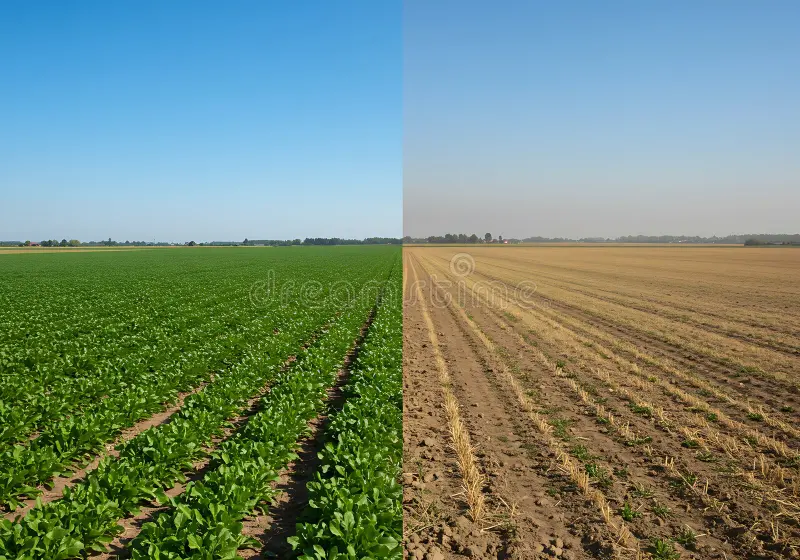
Most of our areas used to experience good, reliable, plentiful and consistent rainfall, which is not the case now due to climate change that has brought about droughts.
For example, in Rift-valley, there used to support a wide variety of animals and crops, but the two are no longer compatible with each other.
It is time to start afforestration and re-afforestation while blending with the growing of drought resistant crops and animals so as to re-vegetate the much needed green glories.
The traditional farming methods are no longer useful because they were based on previous rainfall patterns that can no longer be reliable.
Traditional practices have also hindered the number and types of animals people used to keep.
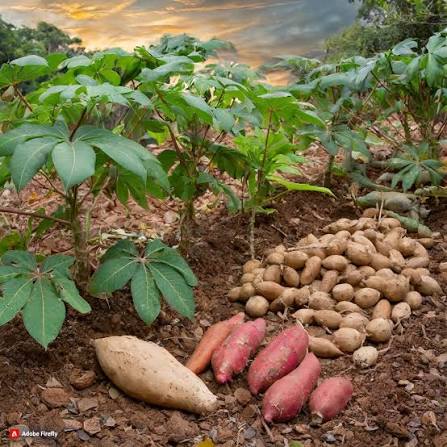
This is a good opportunity to start cultivating drought resistant varieties of our crops like sorghum, millet, some varieties of maize, cassava, sweet potatoes, cow peas, pigeon peas, beans among others.
These crops can withstand low rains engulfed in prolonged droughts. These drought resistant crop varieties are more productive.
These varieties can be grown in large scale because they can be planted again and again in short cycles to yield good results per acre.
They can also be grown together with other varieties or as sole crops. Farmers should be encouraged to buy the recommended varieties and plant them at the recommended distances.
They should be reminded to practice inter-cropping to help mitigate the risk that comes with growing one variety of food.
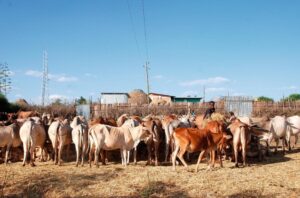
People should also start rearing indigenous animals and resistant animals from dryness because they need less feed and water and are also more disease resistant than the foreign species that have been discouraged from use. Fewer animals should be reared to reduce on the amount of feed.
Farmers should also put up fodder banks that can supplement fodder for the animals as well as help in restoring the soil.
Farmers should rear animals and cultivate their farms together so as to use the manure to help fertilize their farms and moisture.
The adoption of new techniques and technologies in agricultural production will also go a long way in supplementing food security and restoring the ecology, some of these are;
Carrying out appropriate agricultural practices that will help in maintaining good soil structure and water conservation, such as minimizing tillage. Using micro irrigation techniques to help utilize the limited rainfall we experience.
Growing trees together with crops and animals to help in restoring the fertility of the soils as well as supplementing our food supply and medicine. Using contour bunding to help in the water conservation.
Constructing small dams to help store water. Using water harvesting techniques. Vegetation of the entire area should take place. This will involve restoring the vegetation of our area, which will help in restoring the ecology.
Wetlands should be put under conservation so as to ensure that water is filtered as it percolates down into the ground. People who are willing to take part in this process and who have land at their disposal should be encouraged to take up this responsibility.
Wherever it is possible, the government and other relevant entity should financially support individuals and cooperatives that are willing to rehabilitate their own piece of land.
Education of the people on these implications and sensitization should be emphasized because it will help them know what to do.
They should also be encouraged to take up responsibility instead of relying on the government to do everything for them. They should also work together collectively to adopt the best practices and standards so as to achieve sustainability.
Women and youths should also be encouraged to take part in these activities because they play a key role in food production as well as coming up with new ideas.
The existence of the markets should also be emphasized so as to provide economic benefit from the produce.
The other issues that need to be addressed include insurance and early warning systems.
It will be a great challenge, but the benefits associated with these practices far outweigh the shortcomings, and although some of the suggested methods might be very expensive and time consuming before they start bearing fruits,
It will be very important that credit schemes be smoothened to facilitate easy development of such initiatives.
The situation is indeed pathetic because of the long droughts that have persisted for long with little or no rains at all.
Nevertheless, the farmers should be advised to take up this challenge and change their agricultural practices if at all they want to survive economically and have a bountiful harvest.