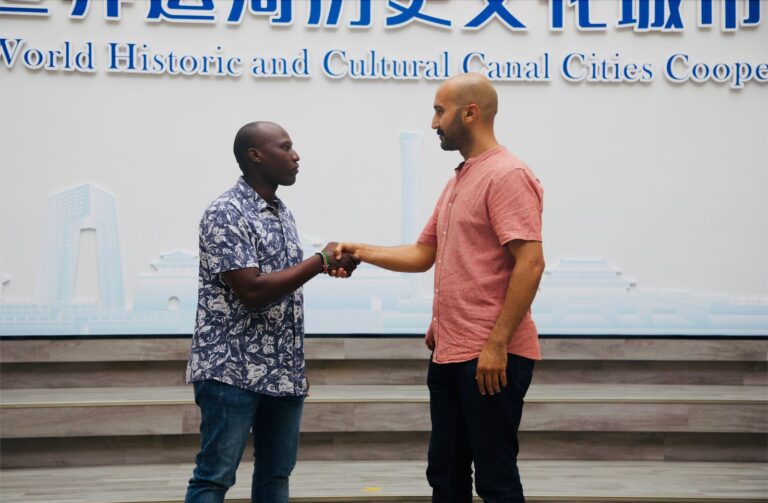
On our first day of the four-day visit to Yangzhou City a couple of weeks ago, myself and nine other students studying for a degree in International Communication at the Communication University of China, Beijing, couldn’t help but marvel at the ancient city whose rich culture and crucial role in linking other cities along The Grand Canal resounds to-date.
Yangzhou is part of the Grand Canal which winds through more than 3,200 kilometers and is the earliest, largest, and longest man-made canal in the world.
The City’s History
Yangzhou has a glorious past. The current available history shows that the city began in the Spring and Autumn Period. According to Zuo Zhuan, in the autumn of the ninth year of Ai Gong of Lu (486 BC), “Wu City and Han City served as a link between the Jianghuai River and the Yangtze River.” Hancheng was the first name given to the city of Yangzhou.
On The Grand Canal, Yangzhou, faces the Huaihe River, crosses the river, and faces the sea. The opening of the Beijing-Hangzhou Canal has created Yangzhou’s position as a land and water transportation hub and a north-south cargo distribution center. This has made Yangzhou prosperous.
According to the United Nations Educational, Scientific and Cultural Organization (UNESCO), the Grand Canal is a vast waterway system in the north-eastern and central-eastern plains of China.
It is a man-made waterway running from Beijing in the north to Zhejiang province in the south. The Grand Canal was constructed in sections from the 5th century BC onwards. It was conceived as a unified means of communication for the Empire for the first time in the 7th century AD (Sui dynasty).
“This led to a series of gigantic construction sites, creating the world’s largest and most extensive civil engineering project prior to the Industrial Revolution. It formed the backbone of the Chinese Empire’s inland communication system, transporting grain and strategic raw materials, and supplying rice to feed the population.
By the 13th century, it consisted of more than 2,000 km of artificial waterways, linking five of China’s main river basins of the Haihe River, the Yellow River, the Huaihe River, the Yangtze River and the Qiantang River. It has played an important role in ensuring the country’s economic prosperity and stability and is still in use today as a major means of communication,” a report by UNESCO read in part.
Yangzhou Grand Museums and Architectural Marvels
Back to Yangzhou, the city is popular for its architectural splendor marked and beautified by the numerous temples, gardens, and mansions dotting its space.
Mohammad Al-Dmour from Jordan whom I study with at the Communication University of China says, “during my visit to Yangzhou, I noticed the keenness of the local people to welcome the city’s visitors in the best way and provide the most delicious foods, especially those for which it is famous, such as tofu, goose meat, and many other distinctive and diverse dishes that reflect the great heritage that characterizes Yangzhou.”
Mohammad further says that the most prominent thing that caught his attention in the museums we visited was the documentation of all the stages that the city went through until it reached this great degree of development and civilization, which allows the visitor to learn about one of the oldest civilizations in the world, and without a doubt Yangzhou was and still one of the cities that played a role China’s prosperity was significant due to the remarkable development that characterized the city hundreds of years ago and the economic role it played and continues to play through its location in the heart of one of the most important and longest canals in the world.
The Daming Temple, one of the oldest and largest temples in China, showcases intricate Buddhist carvings and stunning architecture.
The Geyuan Garden on the other hand is a classic example of a traditional Chinese garden which never fails to delight tourists visiting the city whose landscapes are breathtaking coupled by elegant pavilions, and serene water features.
Rich and Inviting Cuisine
Not to forget, when you visit Yangzhou it would be unwise to leave before savoring its delectable cuisine. The city is famous for its Huaiyang cuisine, one of the four major culinary traditions in China.
According to locals, the Huaiyang cuisine is characterized by its delicate flavors, meticulous preparation, and elegant presentation. Visitors must try the iconic Yangzhou fried rice, a flavorful combination of rice, eggs, vegetables, and meat. Other local specialties include steamed dumplings, braised pork in soy sauce, and sweet osmanthus cakes.
Rich Culture and Hospitality
Yangzhou’s vibrant cultural scene is a testament to its rich artistic heritage. The city has been a hub for scholars, poets, and artists throughout history.
The Yangzhou Museum houses an impressive collection of cultural artifacts, including calligraphy, paintings, and porcelain. The annual Yangzhou International Calligraphy and Painting Festival attracts artists from around the world, showcasing the city’s deep appreciation for the arts. Visitors can also witness traditional folk performances, such as Yangzhou storytelling and Yangzhou puppet shows, which bring the local culture to life.
In the hospitality scene, Yangzhou boasts an extra layer of charm that adds to the city’s appeal. Her locals are known for their friendliness and welcoming nature, making visitors feel right at home. The city hosts several vibrant festivals throughout the year, including the Dongguan Ancient Canal Lantern Festival and the Yangzhou Eight Eccentrics Poetry Festival. These celebrations offer a glimpse into the city’s lively spirit and provide an opportunity to immerse oneself in the local traditions.
Her Finacial Standing
The City’s Gross Domestic Product (GDP) as of 2022 had reached 710.498 billion yuan (which is equal to over 14 trillion in Kenya shillings) and per capita GDP which is the per person contribution to the city’s economic output had reached 155 thousand yuan (Ksh 3,167).
As a city that offers a rich history and heritage of the significant role The Grand Canal has played in the development of China over the years, locals say that in the face of rapid urbanization, they are at the forefront of preserving the city’s rich culture especially after UNESCO designated it as a World Heritage Site.